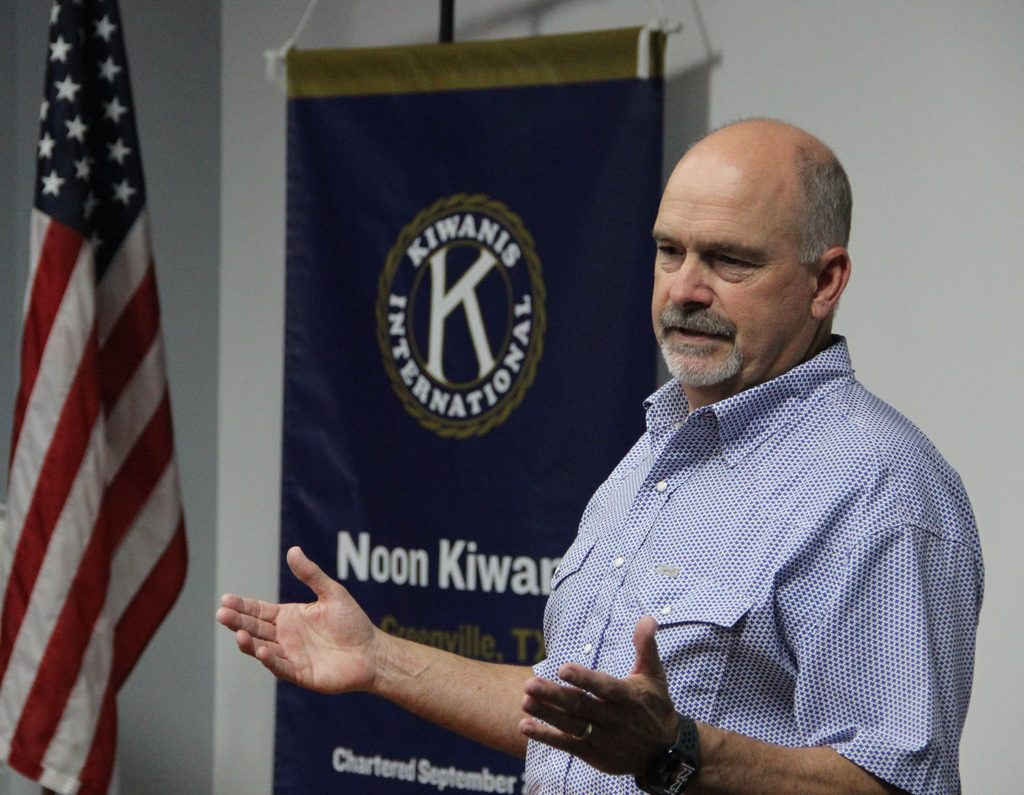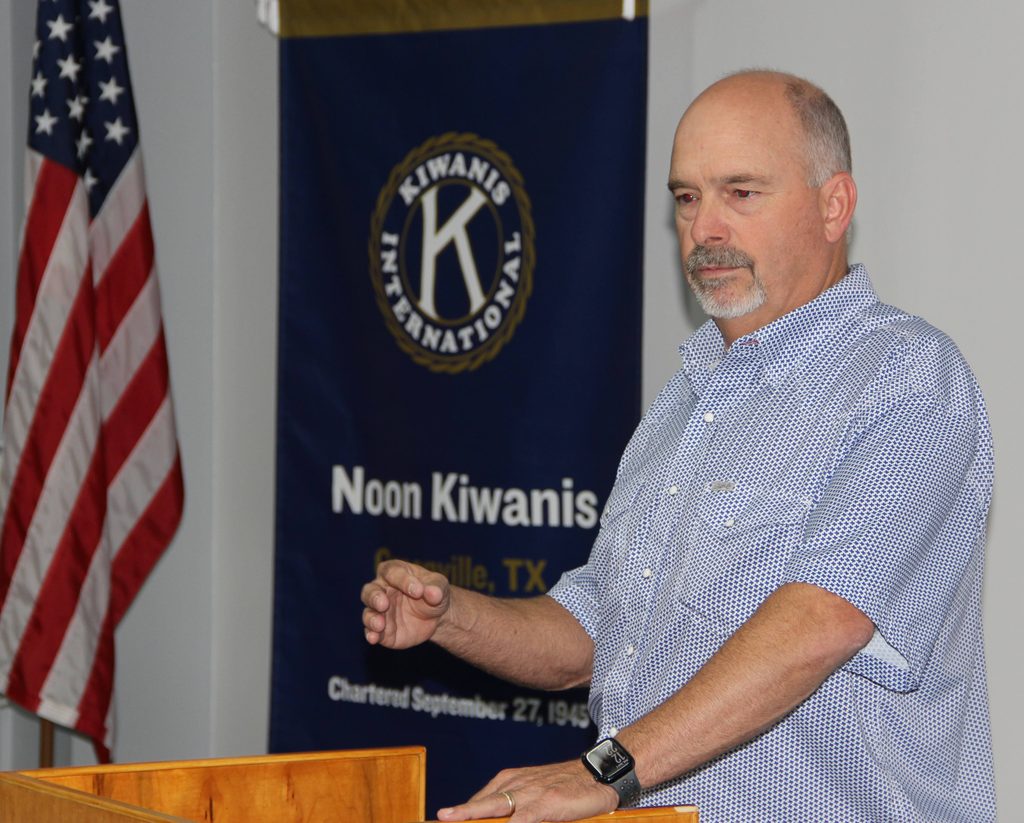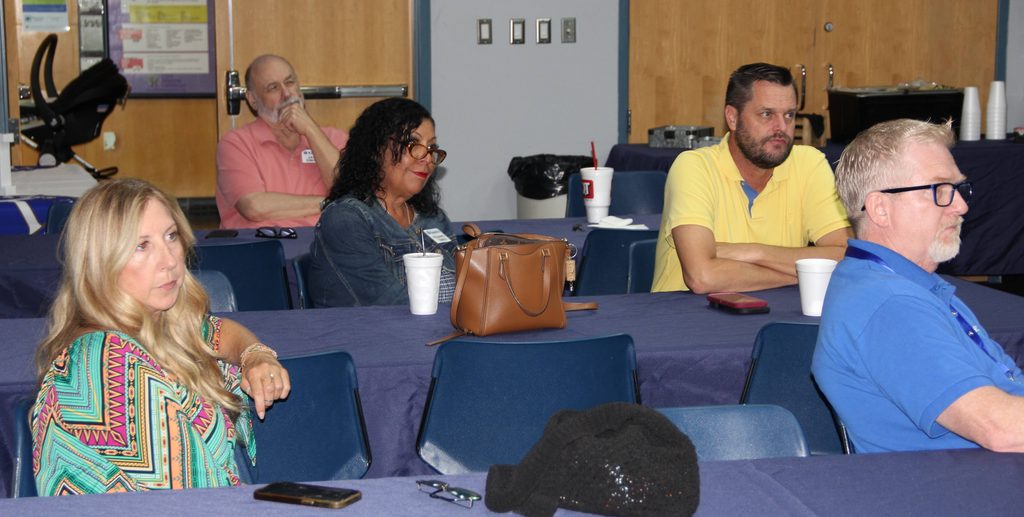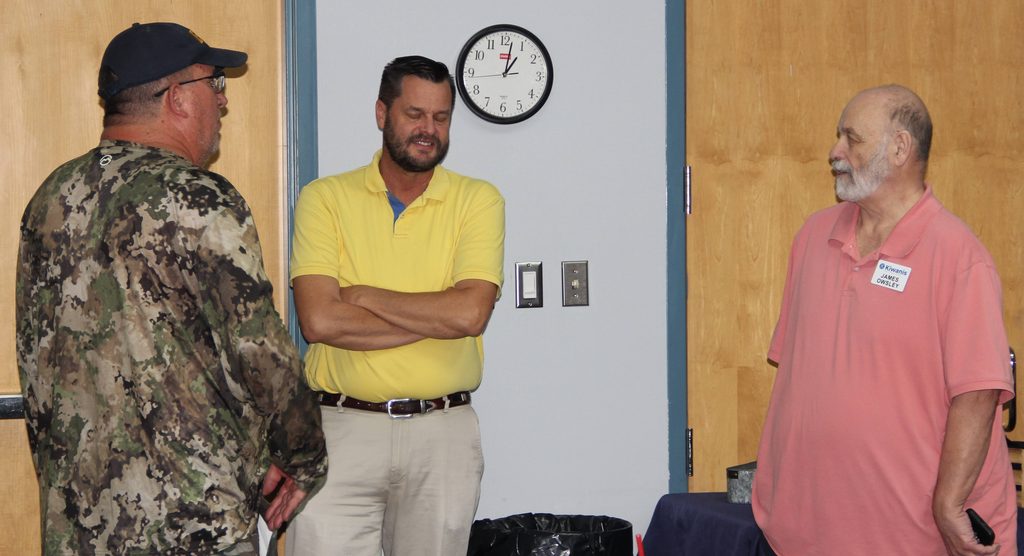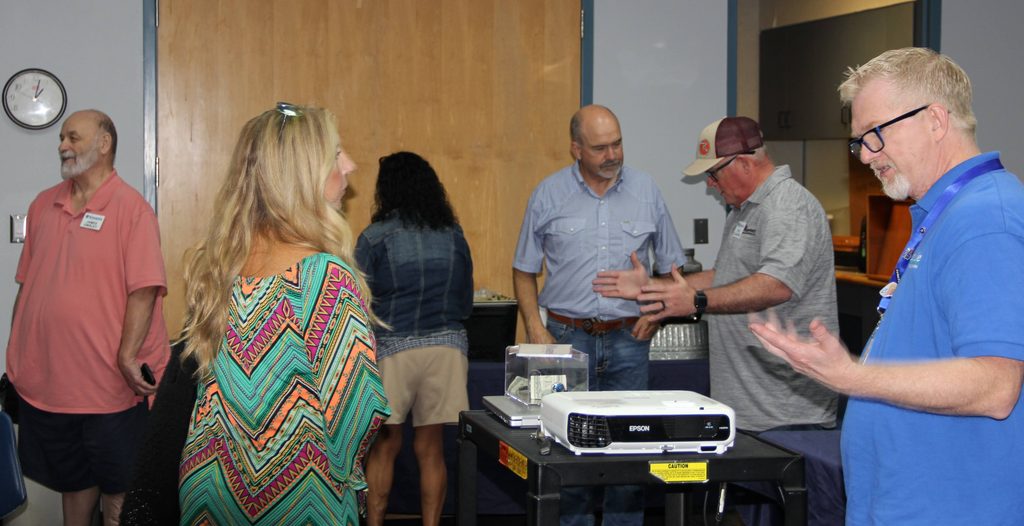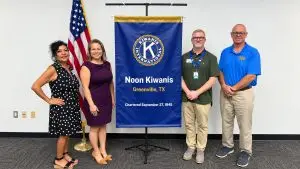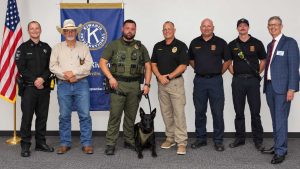
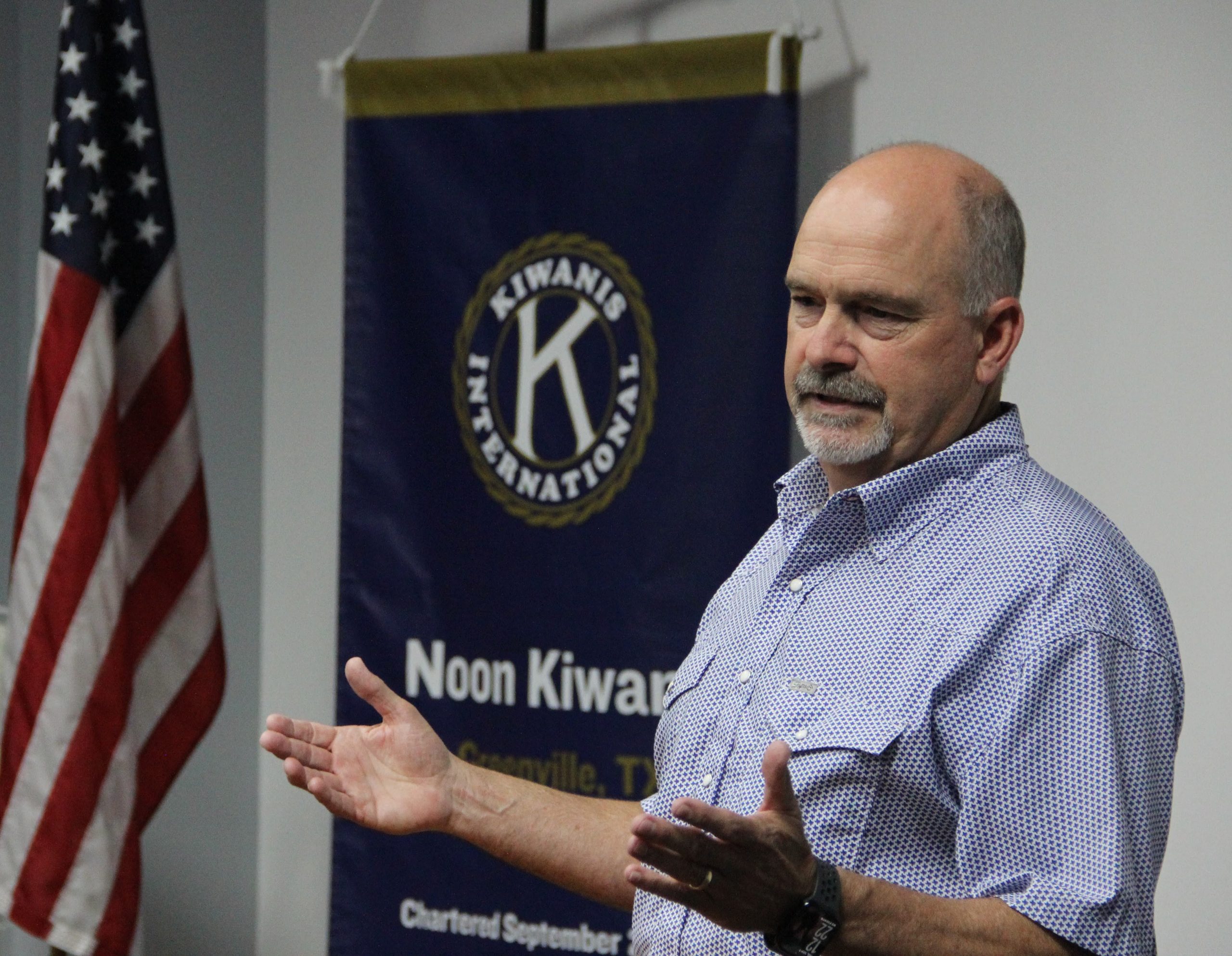
The Greenville Noon Kiwanis Club recently welcomed Hunt County Precinct 2 Commissioner David Monroe as our guest speaker for an informative discussion about the rapid growth taking place across Hunt County and the challenges that growth creates for county government, roads, infrastructure, and long-term planning.
Commissioner Monroe began by sharing just how quickly our area is changing. Hunt County’s population has grown from approximately 100,000 residents in 2020 to roughly 124,000 today. Some communities are experiencing even more dramatic growth, including Caddo Mills, which has increased from around 1,500 residents to approximately 5,700 in only five years.
That growth brings new opportunities for Hunt County, but it also places significant demands on local infrastructure.
Maintaining 253 Miles of County Roads
Precinct 2 is responsible for approximately 253 miles of county roads and generates an estimated 42 to 43 percent of Hunt County’s revenue.
Commissioner Monroe explained that his precinct operates with a total budget of roughly $4 million, with about half of that amount dedicated to road materials.
One of the greatest challenges is simply the cost of maintaining and rebuilding roads.
A traditional full road overlay can cost approximately $125,000 to $150,000 per mile. To stretch available funding further, Precinct 2 has increasingly used a combination of road leveling and chip sealing, which can cost closer to $30,000 to $35,000 per mile.
This year, the precinct completed a record 32 miles of chip sealing. The process helps seal and protect the road base, reduce water intrusion, and prevent the potholes and deterioration that can lead to much more expensive repairs later.
Finding More Efficient Ways to Use Taxpayer Dollars
Commissioner Monroe also discussed several steps his office has taken to improve efficiency and make better use of existing resources.
By auctioning older county machinery and equipment, the precinct generated approximately $1 million that could be reinvested into its equipment budget.
The precinct has also secured approximately $193,000 in grant funding through programs that cover 80 percent of qualifying vehicle replacement costs. In some cases, this has allowed aging county trucks to be replaced with an out-of-pocket cost of only about $7,000 per vehicle.
Commissioner Monroe also explained that the department has reduced its workforce by two positions through attrition while maintaining productivity through improved equipment and operating efficiencies.
Understanding the County’s Role in Development
Another important part of the presentation focused on what county commissioners can and cannot regulate as Hunt County continues to develop.
Unlike cities, counties in Texas generally have very limited zoning authority. Commissioner Monroe explained that Hunt County has no traditional zoning control outside a limited area surrounding Lake Tawakoni.
This can sometimes create confusion among residents who assume the county has the same authority over new development that a city government would have.
He also discussed Municipal Utility Districts, commonly known as MUDs. These districts are authorized at the state level, and county government has limited authority over how densely they are developed. The county can regulate certain infrastructure standards, such as road widths and cul-de-sac requirements, but many broader development decisions fall outside county control.
Commissioner Monroe also discussed a recently proposed amusement park development near Lake Tawakoni. The proposal was denied as presented and would need to go back through the appropriate Planning and Zoning process before moving forward.
Growth Brings Both Opportunity and Responsibility
Commissioner Monroe’s presentation provided our members with a valuable look at the realities of managing one of the fastest-growing areas of Hunt County.
From road construction and equipment costs to development regulations and population growth, local government faces the ongoing challenge of balancing limited resources with rapidly increasing demand.
We greatly appreciate Commissioner David Monroe taking the time to speak with the Greenville Noon Kiwanis Club and answer questions from our members.
Meetings like this are an important part of Kiwanis — bringing community leaders and citizens together to better understand the issues affecting Greenville and Hunt County while continuing our shared commitment to serving our community.